The researches of archaeologists on the Nessebar peninsula and its water area in the last 40 years have revealed large collections of very significant historical monuments.
Nessebar is one of the most beautiful cities on the Black Sea coast of Bulgaria, and its history is thousands of years old. The numerous monuments make it very valuable for Bulgarian and European science and culture. Nessebar was founded by the Thracians at the end of the second millennium BC, at the end of the 6th century BC, Greek colonists made it a Greek city-state. Rome included the city in its empire in the 1st century BC, and in the 4th century Nessebar was within the borders of Byzantium. It was conquered by the Bulgarians in 812. Nessebar reached its heyday in the 13th and 14th centuries. It fell under the rule of the Ottoman Turks together with the capital of Byzantium – Constantinople in 1453, and in 1878 it met the Russian troops in the Russo-Turkish war.
A large part of them from everything found during the archaeological expeditions in the last 40 years can be seen as exhibits in the new Archaeological Museum of Nessebar. The exhibition area of the museum consists of a lobby and four halls.
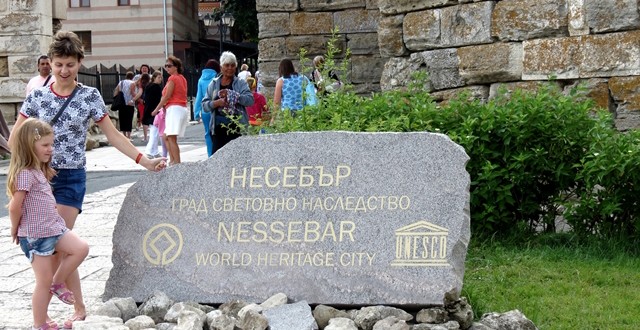
Landmarks in Sunny Beach
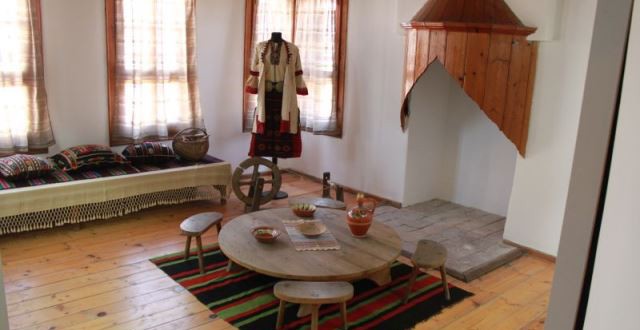
The exhibition presents, albeit partially, the rich artistry of the Bulgarian woman from the Strandzha region, as well as from the plains of Karnobat and Aytos, and last but not least, from the Black Sea coast.
The Moskoiani House is one of the Revival-era architectural monuments. Its design is typical of Nessebar’s residential architecture from the end of the Bulgarian National Revival.
The ground floor of the two-story house is built of stone and features a high ceiling and double-winged door. The upper floor, used as a living space, is clad in wooden boards. This floor has numerous tall windows offering views of the sea. The five rooms are arranged around a central salon, whose wooden ceiling is adorned with a carved star-shaped rosette. The northern rooms, used during winter, are equipped with fireplaces.
The museum hosts an ethnographic exhibition titled “Traditional Costumes and Textiles from the Burgas Region.” This region is one of the richest in terms of traditional weaving and folk costumes, developed over the centuries.
From the era of Ottoman rule, two structures remain that stand out with their distinctive appearance against the silhouette of the city. These are the two windmills of Nessebar.
One windmill is located on the northern shore of the resort, near the remains of a 6th-century basilica. The second windmill stands on the mainland, among the buildings of one of the modern hotels in the resort.
The body of the windmill has a regular cylindrical shape, with walls constructed from roughly cut local stone. Through the arched doorway, built of stone blocks, one enters the ground floor, which was originally used as storage. A staircase made of solid oak logs leads to the second floor, which served as a living space. A fireplace was built into the wall, with a chimney that runs through the full thickness of the wall to the outside.
The workroom of the windmill is located on the third floor. In the center are the still-preserved original millstones and the damaged skeleton of the simple yet cleverly constructed mechanism that harnessed the power of the wind. The conical roof, along with the mechanism, could rotate with the help of additional devices to align with the direction of the wind for maximum efficiency.